

We often hear that crunches, curl-ups or planks are not recommended for exercising with diastasis recti. Why? When and how can we do traditional ab exercises with diastasis recti? And what should we do instead of crunches?
Can you do crunches with diastasis recti? The short answer.
Yes. Current research (August 2026, read on for more on this) shows that crunches and curl-ups are safe with diastasis recti and do not make the gap worse. In fact, trials show curl-ups build abdominal strength without widening the separation. What matters is readiness: rebuild your core foundations first, then reintroduce these movements gradually, watching how your body responds.
Why are planks or crunches often not recommended?
Standard crunches, sit-ups or full planks are often not recommended for exercising with diastasis recti. This is because the way a crunch is usually performed can increase intra-abdominal pressure faster than a recovering core can manage it. If your deep core and pelvic floor aren’t yet working well as a system, that pressure shows up as doming at the front or a feeling of heaviness below. It’s not that the movement is dangerous. It’s a sign the load is ahead of your readiness.
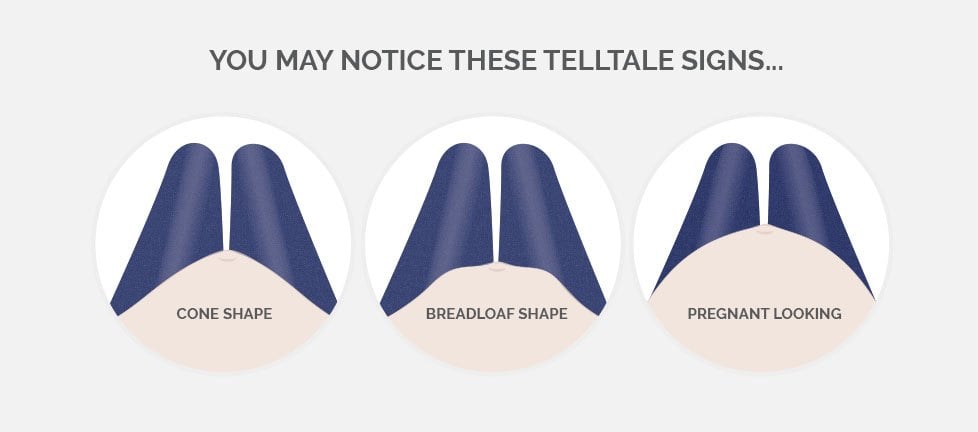
You can actually see what you’re training your abs to do if you look straight down as you curl up: a cone shape, bread-loaf shape or a pregnant-looking belly. These may be signs of diastasis recti, or that your core is not functioning optimally, and not the effect you’re trying to achieve.
The old advice was to eliminate these movements altogether. Current research doesn’t support a ban, and nor do we. The evidence-based approach is to wait until your core musculature, including your pelvic floor, is working well enough to manage the load, then reintroduce them progressively.
We know you need to build the foundations of a restored, functional and strong core first.

Exercising with diastasis recti – building the foundations
Crunches, planks or heavy lifting are not bad or taboo exercises. No movements are. But it’s essential to build the foundations of core and pelvic floor function first, so that you can do them safely.
Diastasis recti is a gap between the muscles at the front of your abs. A small-ish gap may not be a problem at all, and you can have a strong functional core with a small gap. Watch the video on how to test and recognise diastasis recti symptoms here. You may see bulging or doming, and you may feel like you’re ‘falling out at the front’ when performing specific movements or exercises.
So before you train your abs hard, you want to ensure the deeper abdominal muscles are actually recruiting (meaning… ‘kicking in’ and working). These muscles are the Transverse, the Inferior and Exterior Obliques, the Rectus Abdominis, along with the muscles of your pelvic floor.
This is a vital phase of mind-to-muscle reconnection. Learning to recruit and engage the right muscles, first in isolation and then as a unit, must come first. That’s what MUTU System does.
Introducing crunches and other ab exercises back into your workouts
Done right, crunches may be fine with diastasis recti once you’ve re-established function with foundational exercises. Supine spinal flexion (that means curling up from lying on your back) engages and shortens the ‘six-pack’ abdominal muscle, or Rectus. The one that’s stretched out, with the gap. So exercising to shorten it, if performed correctly, can be a good thing.
And anyway, bending forward like this is a perfectly useful human, functional movement! We sometimes need to do it, and we may want to do this type of ab exercise.
What the latest research says (updated August 2026)
The advice on this has changed, and MUTU has updated with it. For years, women with diastasis recti were told to avoid crunches entirely. Newer evidence does not support that restriction.
A randomised controlled trial led by Sandra Gluppe at the Norwegian School of Sport Sciences found that curl-up exercises improved abdominal muscle strength in postpartum women with diastasis recti without worsening the gap. Studies measuring the immediate effect of single exercises show that curl-up type movements actually narrow the gap between the muscles, while some deep-core-only contractions temporarily widen it.
In July 2026, a scoping review by Nina-Margrethe Theodorsen, Gráinne Donnelly and Professor Kari Bø, published in the Journal of Women’s & Pelvic Health Physical Therapy, brought this evidence together and called for guidelines to move away from restriction and avoidance toward confident, progressive exercise. The review also found that abdominal widening in pregnancy is a normal adaptation, that abdominal and pelvic floor exercise is safe, and that improving strength, function and confidence matters more than the millimetres of the gap.
This is the approach MUTU has always taken: no forbidden movements, just movements you build up to.
This isn’t new thinking
This isn’t new thinking
Back in 2015, when I was consulting in the US, this was a fringe position. I put it out there anyway, and ran our thinking past the renowned physiotherapist Diane Lee, who was unequivocal. Abdominal curls matter, she told us, and full sit-ups are a different question entirely. As she put it: “it’s a wrong message to say never do a curl up! That isn’t life.”
Her emphasis was on teaching the curl-up properly and maintaining tension through the midline, because bulging or doming is the clue that the deep system is off and the pelvic floor is having to work far harder to resist the pressure. Focus on the strategy, not the reps.
Eleven years later, the published research says the same thing.
Safe ab exercising with diastasis recti
To perform a curl or crunch, keep the range of movement minimal at first. That means, don’t lift your head and shoulders very high off the ground – there is no muscular benefit to curling right up anyway. And keep the levers short – so knees bent up, feet flat on the floor.
Inhale fully with your head and shoulders completely relaxed on the floor. Then exhale slowly and focus on gently engaging your abdominal and pelvic floor muscles as you lift your head and shoulders just off the floor. Relax completely back down on the inhale. Watch for doming or straining, and be mindful of how your pelvic floor feels.
Remember that crunches with straight legs, outstretched arms, or raised legs, or any adjustment that increases the load, will also increase the strain. Save these progressions until you can manage the extra load without doming, straining or symptoms.
Want to start progressing a plank? Start on all fours, and gradually shimmy your knees back, keeping your shoulders over your hands. This way, you gradually increase the lever, or load, on your abs. If you start to shake, feel like you’re falling out at the front, then thats your limit for now. Bring your knees back in a little. Stay there a while and try again next time.

What to watch out for when exercising with diastasis recti
First, don’t hold your breath. This is common when doing ab exercises, even if you don’t know you’re doing it! Breath-holding builds up pressure and may cause your stomach to pooch or bulge out and your organs to bear down.
Often your hip flexors and lower back are taking the strain in a curl-up movement. This is especially an issue if you restrain your feet when crunching. The muscles you intend to target aren’t doing the work, so you get strain without the benefit.
If you feel or see the following, stop or back up to an easier version. Don’t ‘push through’ shaking, pain or any of these signs. They are your body’s clear signals that you’re not ready for this stage of the movement just yet.
Warning signs to stop
- Bulging or doming anywhere on your abdomen when you do any exercise
- Bulging in or from your vagina or rectum, or any feeling of heaviness or ‘bearing down’
- Pain – In your back, pelvis, abdomen, hips or leg
- Leaking urine or faeces when you sneeze, laugh or cough; or leaking as you’re rushing to the toilet
So be sure to gauge whether you can maintain the tension at the front of your abs and in your pelvic floor. If you’re not sure, either have a Women’s Health Physio check your technique, OR refrain from these moves for now until you know your core function is restored and you can engage the muscles correctly. If in doubt, choose an easier version and build from there. You lose nothing by progressing gradually, and you keep the win of exercising with confidence.
Most important:
The movement is not a bad movement.
You just need to be sure you’re getting it right, and that your body is ready for it.