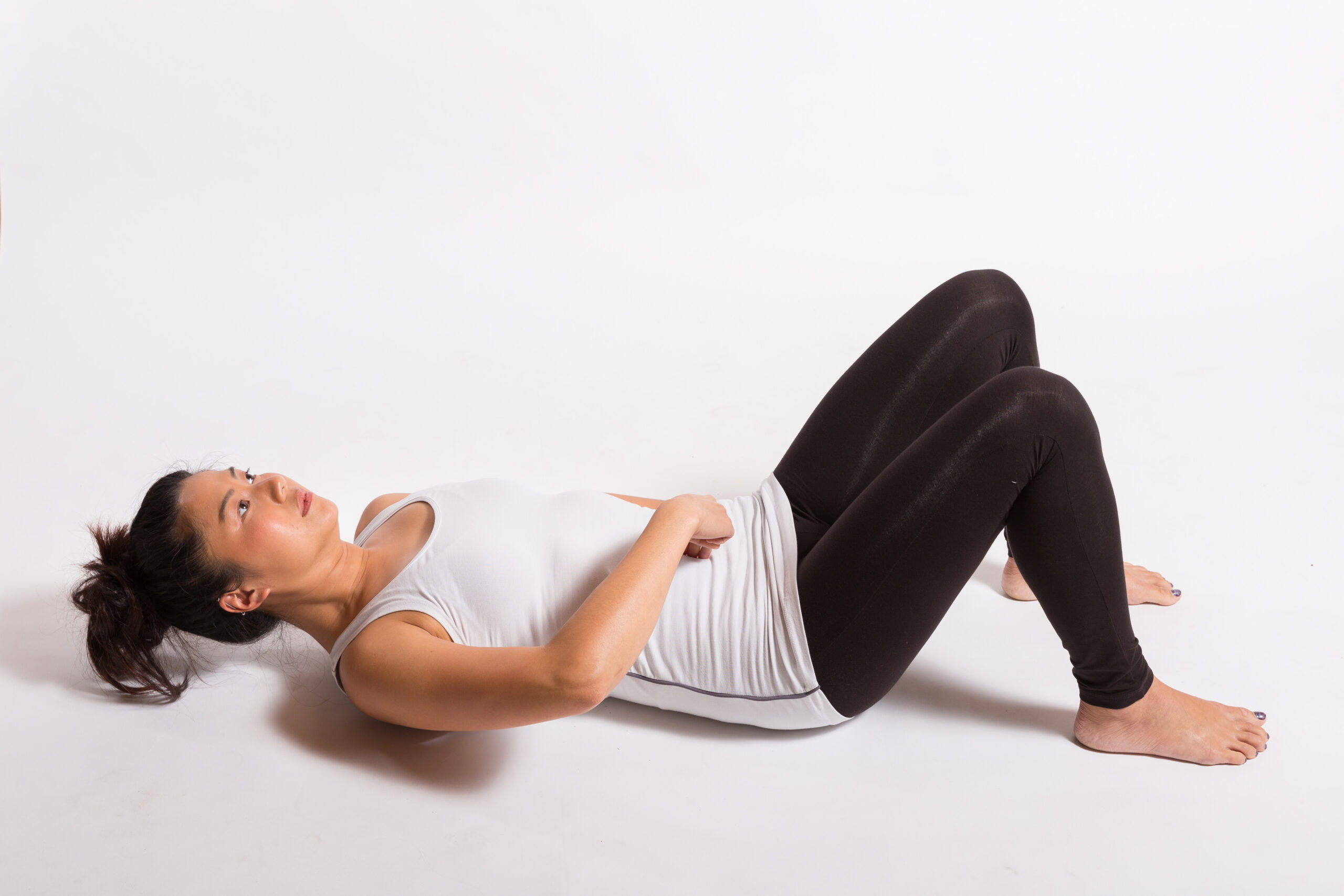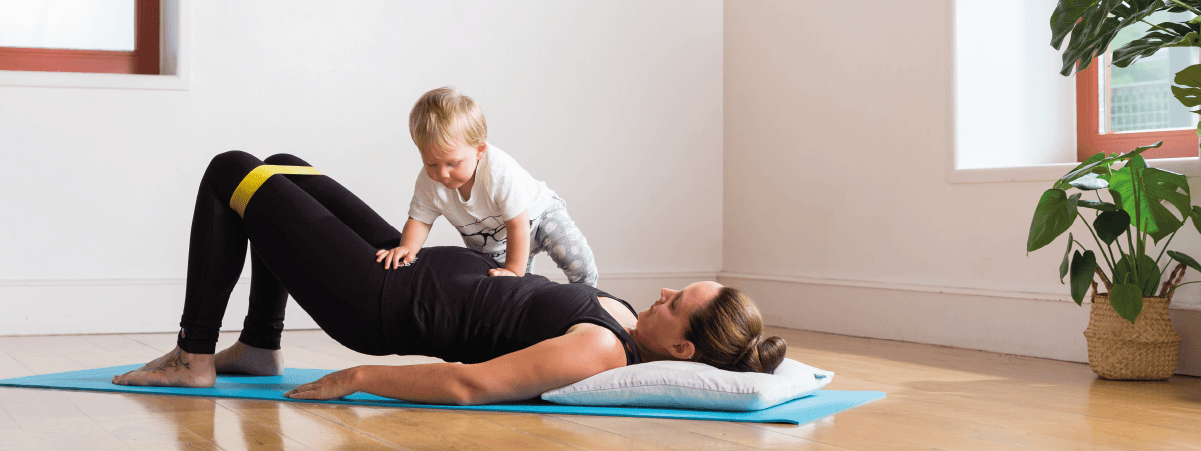



Can you do Pilates with diastasis recti?
Pilates is one of the most common questions we get asked about diastasis recti. Is it safe? Will certain moves make the gap worse? Should you be avoiding it altogether?
Here’s the current answer, and it’s maybe more reassuring than what you’ve probably been told.
Can you do Pilates with diastasis recti?
Yes. Pilates is a good choice with diastasis recti, and there’s no evidence that it causes abdominal separation or makes an existing gap worse.
Some exercises will ask more of a recovering core than others, and that’s worth knowing so you can build up sensibly. But that’s about sequencing, not danger.
What the research says
For years the advice around diastasis recti was built on avoidance: lists of movements to skip, often justified with warnings about pressure damaging the connective tissue along your midline.
In July 2026, a scoping review by Nina-Margrethe Theodorsen, Gráinne Donnelly and Professor Kari Bø, published in the Journal of Women’s & Pelvic Health Physical Therapy, looked across 43 studies and found something different. Abdominal and pelvic floor exercise is safe. It does not widen the gap. And the widening that happens in pregnancy is a normal adaptation, not an injury.
The review went further, naming fear-based messaging as a harm in its own right, because being frightened of your own body is what stops women moving at all.
So the question isn’t whether Pilates is safe. It’s how to progress it in a way that builds strength you can feel.
Why Pilates suits a recovering core
Pilates is low impact, and it works the whole body while building core strength, flexibility and posture. It also puts real attention on breathing and control, which is exactly what a postpartum core needs.
That focus on the deep abdominal muscles and the pelvic floor, your natural corset, makes it a good fit for rebuilding function rather than just chasing effort.
The moves that ask more of you
Rather than a list to avoid, think of these as progressions to build towards.
Anything that lifts both shoulders and both legs off the floor at once increases the load significantly. Double leg lowers, teaser, full roll-ups and long lever plank variations all fall into this group. So does anything that has you bracing hard or holding your breath.
None of these are off-limits forever. They’re simply further along the path than day one.
How to know you’re ready
Your body gives you clear feedback. During any exercise, watch and feel for:
- Doming, coning or bulging along your midline
- A sense of falling out at the front
- Heaviness or bearing down in your vagina or rectum
- Leaking urine when you exert
- Pain in your back, pelvis or abdomen
If any of these show up, the load is ahead of where you are today. Back up to an easier version, or reduce the range. That’s information, not failure.
What you’re looking for instead is the ability to keep gentle tension through your midline, breathe out on the effort, and finish the movement without your belly pushing outwards.
Making Pilates work for you now
Keep one foot or one hand grounded rather than lifting everything at once. Shorten the lever by bending your knees or keeping your arms closer to your body. Use props for support. Exhale on the effort rather than holding your breath. Leave deep twists and big backbends until later in your progression.
And tell your instructor you have diastasis recti. A good one will offer adjustments without making a drama of it. If you can find someone with postnatal training, better still.
Where Pilates fits alongside MUTU
Pilates and MUTU aren’t in competition. MUTU is designed to rebuild the foundations, the connection between your breath, your deep core and your pelvic floor, so that everything else you want to do becomes available to you again.
Plenty of women in our community do both. Build the foundations, then take that back into your Pilates class and notice how differently it feels.
The short version
Pilates won’t give you diastasis recti, and it won’t make your gap worse. Some exercises need building up to, and your body will tell you which ones. Start where you are, progress steadily, and stop measuring your recovery in millimeters.
For more on what’s safe and when, read our guide to exercising with diastasis recti and which ab exercises are safe.
With thanks to Dr Raj Arora, GP, for her contribution to the original version of this article.